

Troubleshooting guide
Furnace Shuts Down Then Restarts After 1 to 3 Hours
Understanding Furnace Lockout and Why It Happens
Prepared by
Bayne L. Vardy — BC Furnace & Air Conditioning Ltd. Serving Greater Vancouver homeowners since 1983.
Updated
The short answer
A furnace that stops, then restarts 1 to 3 hours later, is in lockout: the control board made 3 to 5 attempts, every one failed, and it is waiting out a safety timer. Lockout is a safety feature, not the fault — the cause behind it still needs diagnosing.
Read before you open the furnace
A furnace lockout is the control board’s response to a repeated failure to complete a safe heating cycle. It is designed to protect against unsafe conditions, including the possible presence of unburned gas or carbon monoxide. If your furnace is locking out, the underlying problem should be diagnosed and corrected promptly by a licensed technician. Do not repeatedly reset the furnace without addressing the cause.
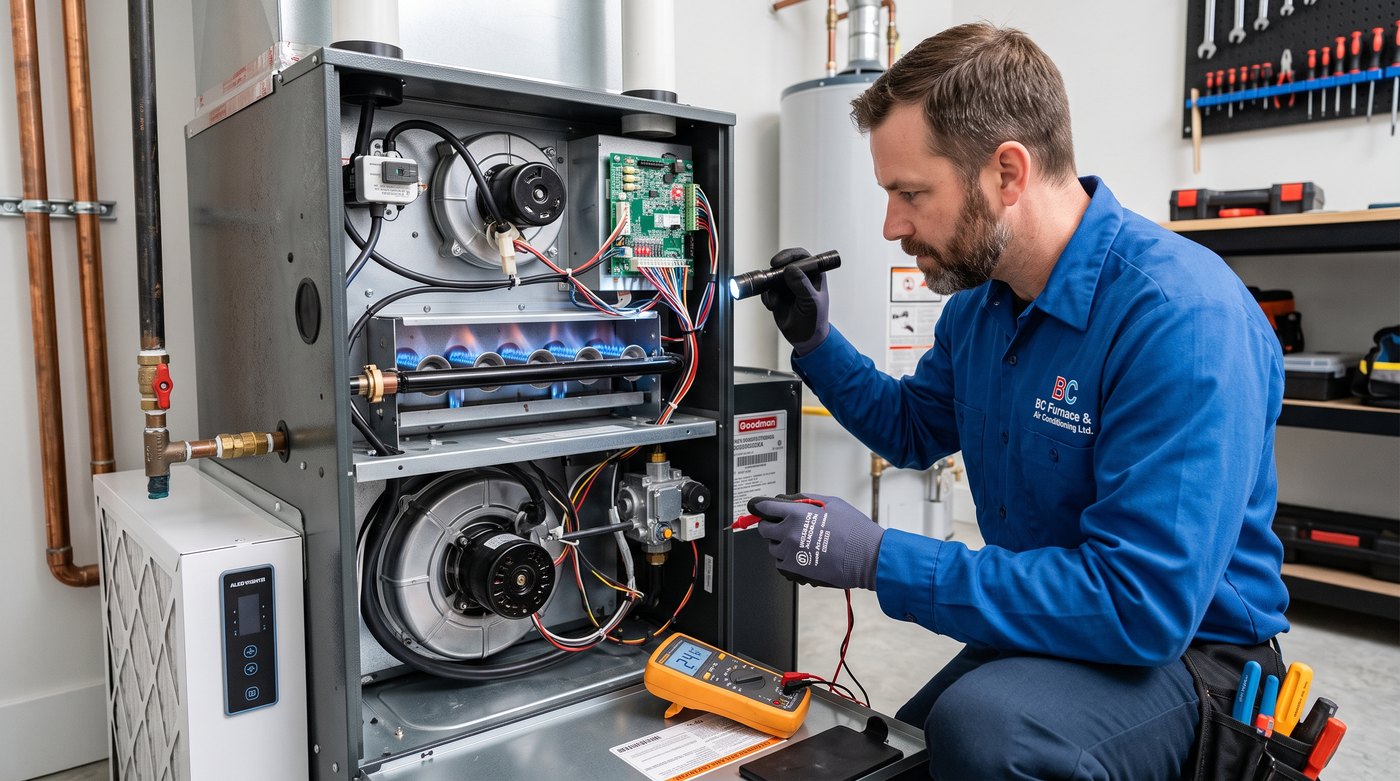
What Is a Furnace Lockout?
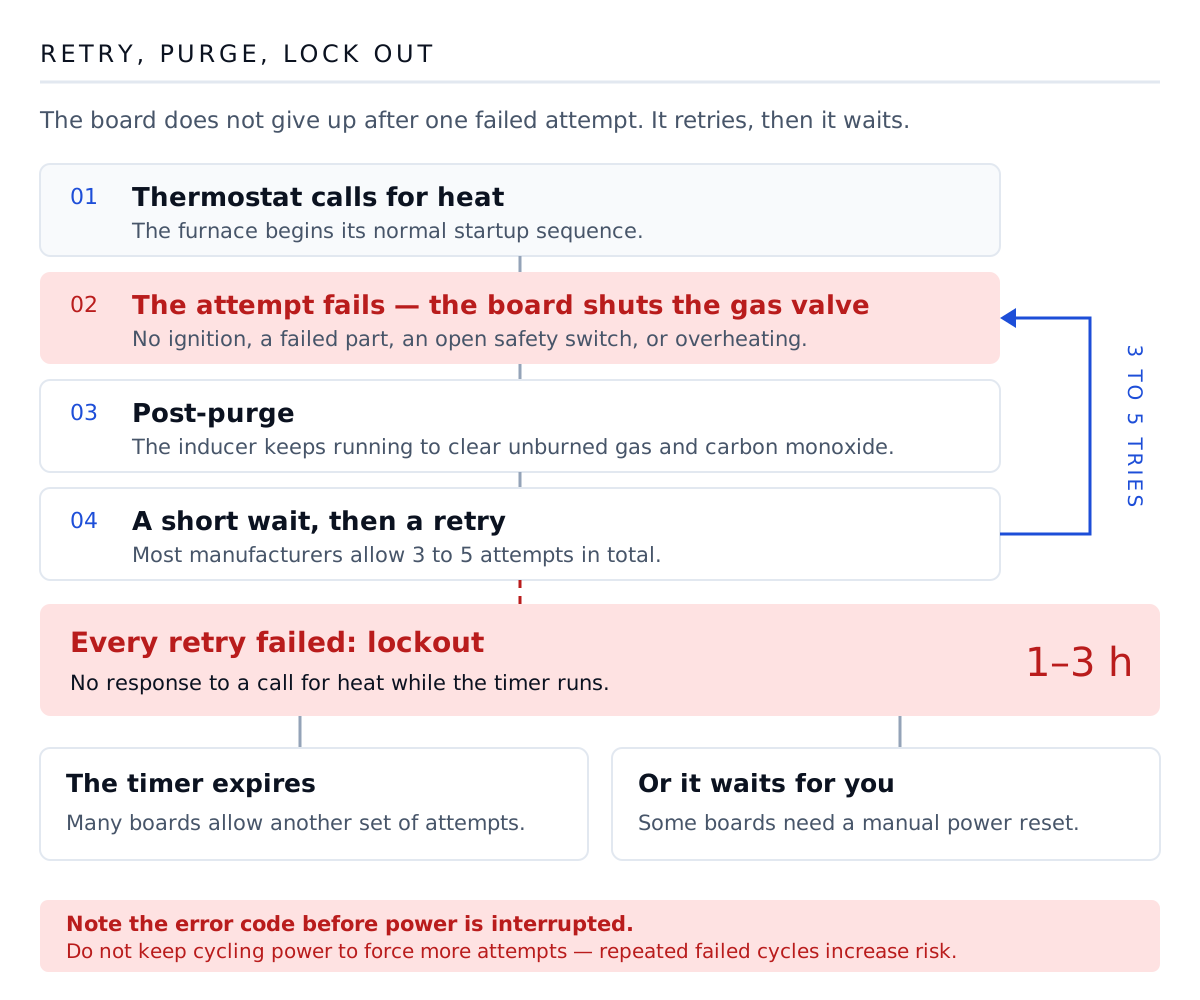
When a modern residential gas furnace fails to complete its normal sequence of operation, the control board does not give up after a single attempt. It typically tries again several times. If those retries also fail, the board enters a protective state known in the HVAC industry as a furnace lockout.
During lockout the furnace will not respond to a call for heat for a set period—commonly between 1 and 3 hours, depending on the manufacturer and control board. After the lockout timer expires, many boards will automatically allow another set of ignition attempts. Some boards require a manual power reset to clear the lockout.
How the Retry and Lockout Sequence Works
A typical sequence looks like this:
- The thermostat calls for heat and the furnace begins its normal startup sequence.
- If the furnace fails to ignite the burners, a critical component fails, a safety switch opens, or the furnace overheats, the control board shuts off the gas valve.
- The inducer (and sometimes the indoor blower) continues to run for a period of time. This post-purge helps clear the heat exchanger of any unburned gas or combustion byproducts, including carbon monoxide.
- The board then waits a short time and retries the ignition sequence. Most manufacturers allow a total of 3 to 5 attempts (the exact number varies by brand and model).
- If every retry fails, the board enters lockout and will not attempt to start again for 1 to 3 hours (or until power is cycled on some models).
Why Lockout Exists
Lockout is a deliberate safety feature. Repeated failed ignition attempts can allow unburned gas to accumulate. Overheating or certain component failures can also create unsafe conditions. By stopping further attempts for a period of time, the control board reduces the risk of fire, explosion, or carbon monoxide exposure while giving the system time to clear and cool.
In short, lockout usually means the furnace has detected something abnormal and is protecting the home and its occupants.
Common Causes of Furnace Lockout
Many different problems can trigger repeated failed cycles and eventual lockout. Some of the more frequent ones include:
- Dirty or failed flame sensor (burners light then shut off after a few seconds)
- Failed or weak hot surface ignitor
- Pressure switch problems (stuck open, stuck closed, water in tubing, or weak inducer)
- Restricted airflow causing high-limit trips (dirty filter, closed registers, blocked returns)
- Flame rollout switch trips
- Gas supply or gas valve issues
- Control board or wiring faults
What Homeowners Should Do
If your furnace repeatedly locks out:
- Note any error codes or LED flash patterns on the control board before power is interrupted. These codes often point to the failed component or safety.
- Check the simple items: dirty filter, closed supply registers, and blocked return-air grilles.
- Do not keep cycling power to force more ignition attempts without identifying the cause. Repeated failed cycles increase risk.
- Contact a licensed HVAC technician. Lockout is the furnace’s way of signaling that something needs professional attention.
A Built-In Safety Mechanism
Most modern residential furnaces include this retry-and-lockout behaviour precisely because abnormal operation can be dangerous. The post-purge that runs after a failed attempt helps clear residual gases, and the timed lockout prevents continuous unsafe cycling. Treating a lockout as a warning—and having the underlying problem diagnosed promptly—is the safest approach.
Common questions
- How long does a furnace lockout last?
- Commonly between 1 and 3 hours, depending on the manufacturer and control board, and the furnace will not respond to a call for heat during that time. When the timer expires many boards automatically allow another set of ignition attempts; some require a manual power reset to clear the lockout.
- Why does the inducer keep running after the burners fail to light?
- That is the post-purge. After a failed attempt the board shuts off the gas valve but keeps the inducer, and sometimes the indoor blower, running for a period to clear the heat exchanger of unburned gas and combustion byproducts, including carbon monoxide, before it retries.
- How many times will a furnace try to light before it locks out?
- Most manufacturers allow a total of 3 to 5 attempts, with a post-purge and a short wait between them, though the exact number varies by brand and model. If every one of those attempts fails, the board enters lockout.
- Can I just keep resetting a furnace that locks out?
- No. Cycling power to force more ignition attempts without identifying the cause increases risk, because repeated failed attempts can let unburned gas accumulate. Note any error code or LED flash pattern before power is interrupted, check the filter, registers and return grilles, and contact a licensed technician.
Parts in this guide
Read next
Know which part failed? We ship it.
Ignitors, pressure switches, control boards and gas valves on the shelf at our Coquitlam warehouse — same-day pickup in Greater Vancouver, shipped worldwide. Call with your model number and we will confirm the part before you order.