

Troubleshooting guide
Pressure Switch Stuck Open
Why Your Furnace Will Not Start the Heating Sequence
Prepared by
Bayne L. Vardy — BC Furnace & Air Conditioning Ltd. Serving Greater Vancouver homeowners since 1983.
Updated
The short answer
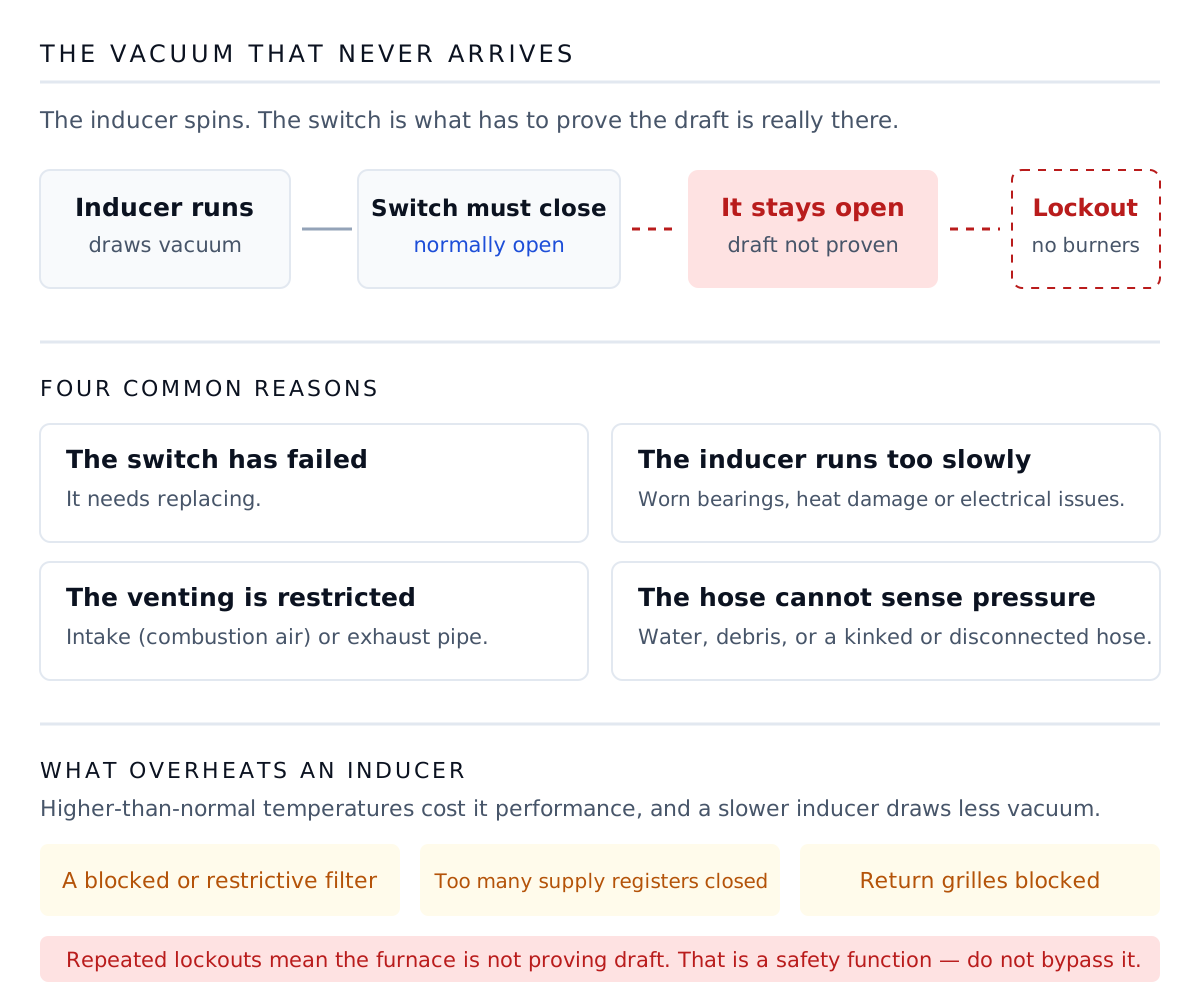
A normally open pressure switch has to close before the board will light the burners. If the inducer cannot pull or hold enough vacuum to close it, the furnace stays locked out of the heating cycle and the burners never light.
Read before you open the furnace
Never blow into or suck on the pressure switch tubing. The diaphragm inside the switch is very delicate and can be permanently damaged by even light pressure from your mouth. Damaging the switch can create an unsafe condition. This guide is for educational purposes only. Diagnosis and replacement of pressure switches, inducers, or venting components should be performed by a licensed HVAC technician.
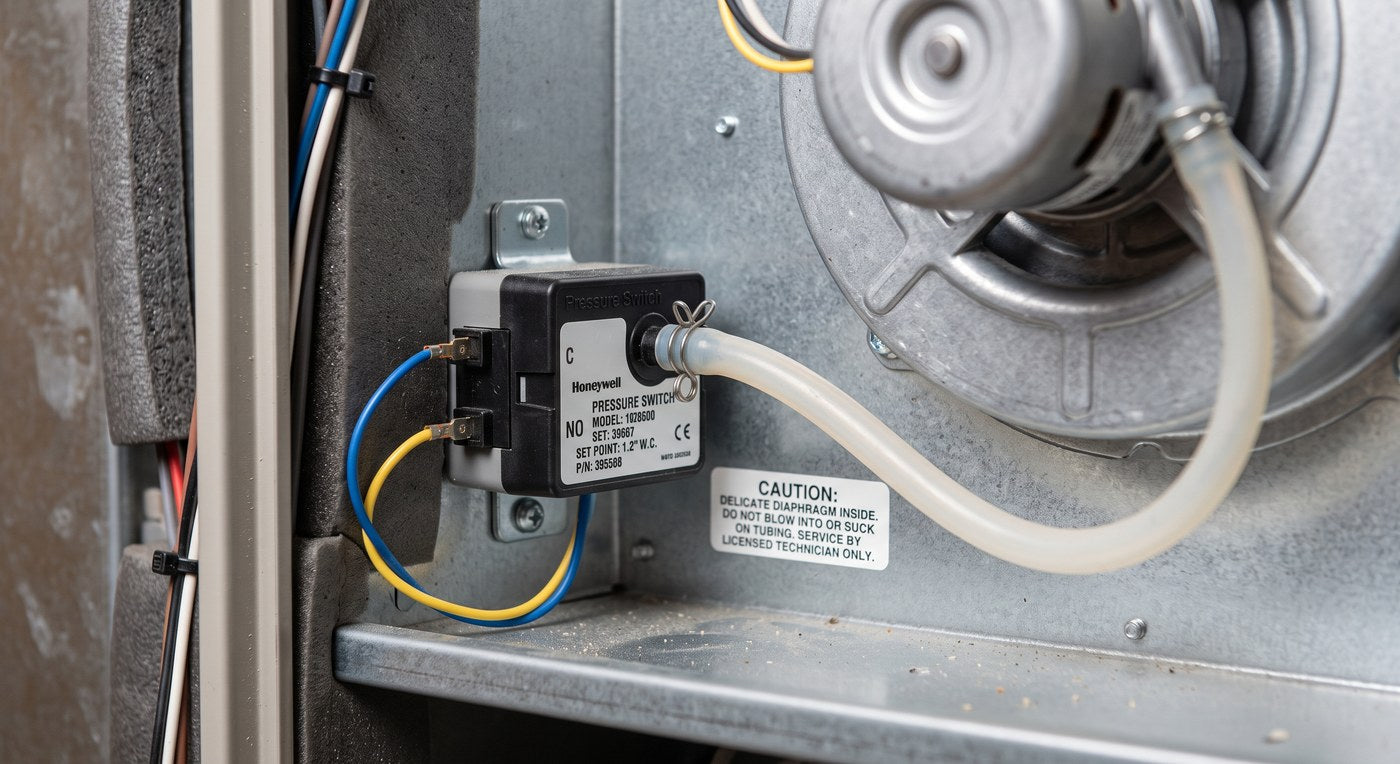
A pressure switch that remains stuck in the open position is a common reason a gas furnace will not start its heating sequence. Understanding what the switch does, why it may stay open, and what conditions can cause the problem helps you recognise when simple checks may help and when professional service is required.
What the Pressure Switch Does
The pressure switch is a safety device that confirms the inducer, or draft motor, is creating enough vacuum before the furnace is allowed to ignite. Most residential furnace pressure switches are normally open.
- When the furnace is idle, the pressure switch is open. The control board will not proceed with the ignition sequence while the switch remains open.
- When the inducer starts and reaches proper speed, it creates vacuum that closes the pressure switch.
- Once the switch closes, the control board is allowed to continue the sequence: energise the hot surface ignitor, open the gas valve, and so on.
- If the inducer cannot produce or maintain enough vacuum to close, or keep closed, the pressure switch, the furnace remains locked out of the heating cycle.
Water in the Pressure Switch Tubing
One relatively common and sometimes easy-to-correct cause of a pressure switch stuck open error is a droplet of water in the rubber hose or tubing that connects to the pressure switch.
- Condensation can form in the tubing, especially on high-efficiency condensing furnaces or in certain weather conditions.
- A small amount of water can prevent the switch from sensing the correct pressure and trigger an open-switch error code.
- As a basic check, the tubing can be carefully removed and gently shaken to see whether any water droplets come out. Do not blow or suck on the tubing.
Protect the Pressure Switch Diaphragm
Every pressure switch contains a very delicate rubber diaphragm. Always treat the tubing and switch as sensitive components.
Do not skip this
Blowing into the tubing or sucking on it, even briefly, can stretch, puncture, or otherwise damage the diaphragm. A damaged switch may fail to operate correctly and should be replaced.
Inducer Problems Caused by Restricted Airflow
An inducer that has been exposed to higher-than-normal temperatures can lose performance. Common causes of overheating include:
- A blocked or overly restrictive air filter.
- Too many supply, or heat, registers closed.
- Return-air grilles blocked by furniture, curtains, or other obstacles.
When the inducer runs slower than designed, because of heat damage, wear, or other issues, it may no longer generate enough vacuum to close the pressure switch consistently. The furnace will then remain in a locked-out or pressure switch open condition.
Common Reasons a Pressure Switch Stays Open
When a pressure switch is reported as stuck open, the underlying cause is often one of the following:
- The pressure switch itself has failed and needs replacement.
- The inducer motor is running too slowly, from worn bearings, heat damage, or electrical issues.
- There is a restriction in the intake, or combustion air, pipe or the exhaust vent pipe.
- Water, debris, or a disconnected or kinked hose is preventing proper pressure sensing.
When to Call a Professional
Homeowners can safely check for obvious filter problems, blocked registers, and, carefully, water in the tubing. Most other causes — testing switch operation, measuring inducer performance, inspecting venting, or replacing the pressure switch — require a licensed technician.
Repeated pressure-switch lockouts should not be ignored. They indicate that the furnace is not proving proper draft, which is a critical safety function.
Common questions
- Can a droplet of water really stop the furnace starting?
- Yes, and it is one of the more common causes. Condensation collects in the sensing tubing, especially on high-efficiency condensing furnaces, and a small amount of water can stop the switch reading the correct pressure. Removing the hose and gently shaking it out is a reasonable homeowner check — never blow into it.
- Why would a dirty filter cause a pressure switch error?
- Restricted airflow lets the furnace run hotter than designed, and an inducer exposed to higher-than-normal temperatures loses performance. A slower inducer draws less vacuum, and eventually not enough to close the pressure switch consistently. Closed supply registers and blocked return grilles do the same thing.
- The inducer is running, so why does it say the switch is open?
- Because the switch proves the draft, not the motor. A spinning inducer that is worn, heat-damaged, or fighting a restricted intake or exhaust pipe may not generate the vacuum the switch needs to close. The board only ever sees the switch, so it holds the burners off until that switch closes.
Parts in this guide
Read next
Know which part failed? We ship it.
Ignitors, pressure switches, control boards and gas valves on the shelf at our Coquitlam warehouse — same-day pickup in Greater Vancouver, shipped worldwide. Call with your model number and we will confirm the part before you order.