

Troubleshooting guide
Furnace Starts Then Shuts Off
Common Causes of Short Cycling and Early Shutdown
Prepared by
Bayne L. Vardy — BC Furnace & Air Conditioning Ltd. Serving Greater Vancouver homeowners since 1983.
Updated
The short answer
Time it. Shutting down after 5-7 seconds points at the flame sensor. Running several minutes then restarting points at airflow — a blocked filter or closed registers overheating the heat exchanger. A hard lockout points at a rollout switch, and that one needs a technician.
Read before you open the furnace
A furnace that starts and then shuts down can indicate simple airflow problems — or more serious issues such as a cracked heat exchanger that may allow carbon monoxide to enter the home. If you suspect a cracked heat exchanger, smell gas, or experience symptoms of carbon monoxide exposure, leave the home immediately and contact a licensed technician and your gas utility. This guide is for educational purposes only and is not a substitute for professional diagnosis and repair.
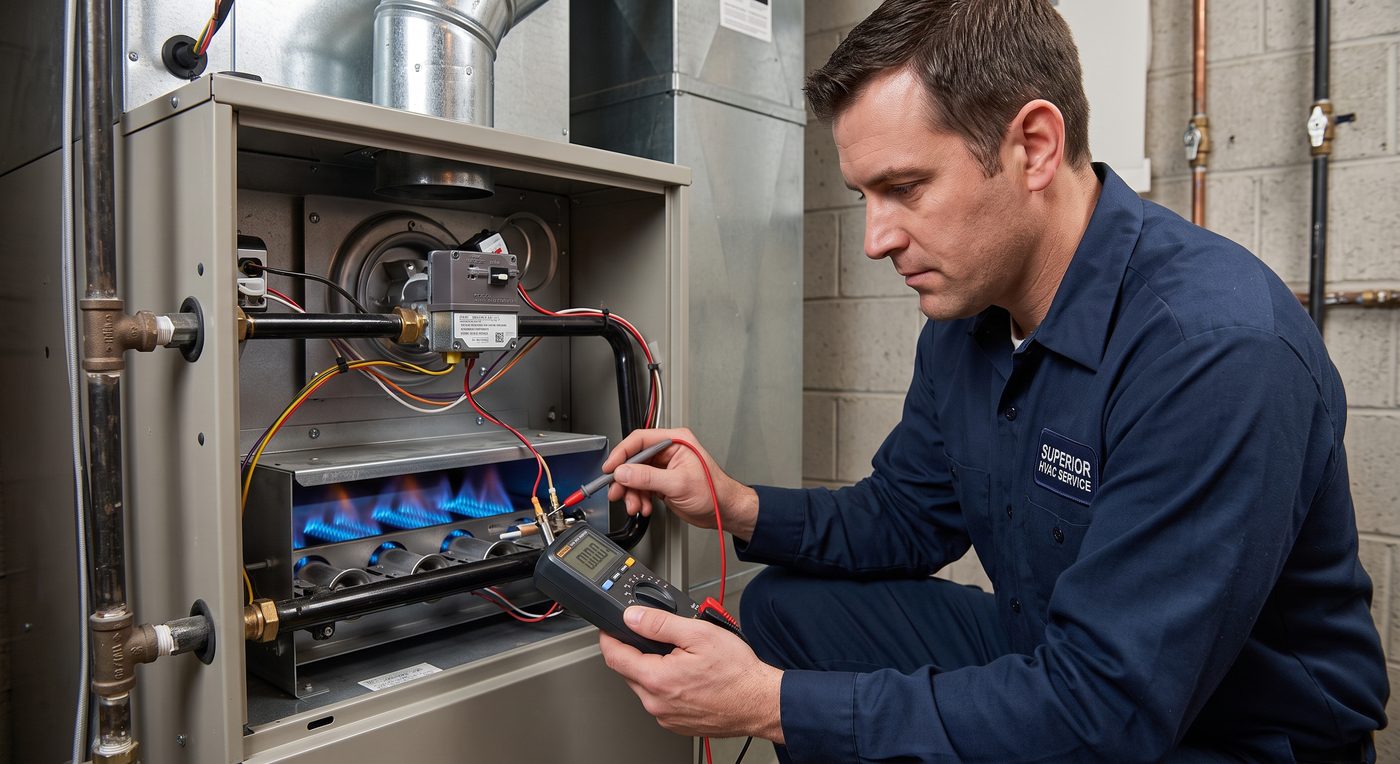
When a gas furnace lights successfully but then shuts off after a short time (or repeatedly cycles on and off), the cause is often related to flame sensing, airflow restriction, overheating, or a failing safety device. Observing how long the furnace runs before shutting down can help narrow down the most likely cause.

01Shuts Off After Only 5-7 Seconds (Flame Sensor)
If the burners light and then the furnace shuts down after only about 5 to 7 seconds, the most common cause is a dirty or failed flame sensor rod.
The flame sensor must detect the flame almost immediately after the gas valve opens. If it does not send a strong enough signal back to the control board, the board closes the gas valve as a safety measure.
- Many homeowners try cleaning the flame sensor with fine sandpaper or steel wool and sometimes restore temporary operation.
- However, cleaning is often only a short-term fix. The sensor can fail again quickly, or cleaning may not restore reliable performance at all.
- In most cases, replacing the flame sensor rod is the more reliable solution.
Note
When installing a new flame sensor, avoid touching the metal rod with your bare fingers. Skin oils can leave deposits that interfere with proper flame sensing.
02Runs for a While, Then Shuts Down and Restarts (Air Filter)
If the furnace runs for several minutes, shuts off, cools down, and then restarts (short cycling), restricted airflow is a frequent cause. A dirty or overly restrictive air filter can cause the heat exchanger to overheat. When that happens, a limit switch opens and shuts the burners down until the temperature drops.
- Check whether the filter is clogged with dust and debris.
- Some high-MERV or very dense filters can restrict airflow even when relatively clean, especially if the system was not designed for that level of filtration.
- As a temporary test, remove the filter and observe whether the short cycling stops. (Do not leave the system running without a filter for extended periods.)
Note
Repeated overheating places significant stress on the heat exchanger, blower motor, and other components and can lead to premature failure of additional parts.
03Restricted Supply or Return Airflow
Furnaces are designed and sized to operate with all supply (heat) registers open and all return-air grilles free of obstructions. Closing too many registers, blocking returns with furniture or curtains, or having restricted ductwork can cause the same overheating and limit-switch shutdown described above.
- Make sure all heat registers are fully open.
- Confirm that return-air grilles are not blocked by furniture, rugs, or other objects.
- After restoring free airflow, test whether the short cycling stops.
Note
Chronic airflow restriction stresses the entire heating system and can contribute to earlier failure of major components.
04Flame Rollout Switches
Most furnaces have one or two flame rollout switches located near the burners. These safety devices open if the area around the burners becomes excessively hot (for example, because of a blocked heat exchanger, poor combustion, or a cracked heat exchanger).
- Some older or less common designs use auto-reset rollout switches that allow the furnace to restart after the area cools.
- The majority of modern furnaces use manual-reset (100% lockout) rollout switches for greater safety. Once they open, the furnace will not restart until the switch is manually reset and the underlying problem is corrected.
Do not skip this
If a flame rollout switch has tripped, do not simply reset or replace the switch and assume the problem is solved. The root cause must be identified. Common underlying problems include a cracked heat exchanger or significant soot buildup (which itself is often related to a cracked or restricted heat exchanger). Both conditions can allow carbon monoxide to enter the living space and pose a serious health and safety risk.
05Weak Pressure Switch or Inducer Motor
A pressure switch that is beginning to fail, or an inducer motor that is weakening and slowing down as it warms up, can also cause the furnace to shut down and then restart intermittently.
- A weak pressure switch may open under conditions that should still provide adequate draft.
- An inducer motor that loses speed as it heats up can cause the pressure switch to open after the furnace has been running for a period of time.
- These issues typically require diagnosis and component testing by a qualified technician.
When to Call a Professional
Some of the checks above (filter condition and open registers) are reasonable for a homeowner to perform. Most other causes — especially those involving the flame sensor, rollout switches, pressure switch, inducer, or any suspicion of a cracked heat exchanger — should be diagnosed and repaired by a licensed HVAC technician.
Repeated short cycling or lockouts should not be ignored. Continuing to operate a furnace under these conditions can damage components and, in the case of a compromised heat exchanger, create a carbon monoxide hazard.
Common questions
- My furnace lights and dies after about five seconds. What is it?
- That timing points at the flame sensor. The rod has to prove flame almost immediately after the gas valve opens, and if the signal reaching the control board is too weak the board closes the valve as a safety measure. Cleaning the rod often buys a short-term fix; replacing it is usually the more reliable one.
- Can a clean filter still cause short cycling?
- Yes. Some high-MERV or very dense filters restrict airflow even when relatively clean, especially if the system was never designed for that level of filtration. The restricted airflow overheats the heat exchanger and a limit switch shuts the burners down until it cools.
- Is it safe to just reset a tripped flame rollout switch?
- No. A tripped rollout switch means the area around the burners became excessively hot, and the root cause has to be found. Common causes are a cracked heat exchanger or heavy soot buildup, both of which can let carbon monoxide into the living space. Resetting or replacing the switch without correcting the cause leaves the hazard in place.
- Does short cycling damage the furnace?
- Repeated overheating puts significant stress on the heat exchanger, the blower motor and other components, and can lead to premature failure of additional parts. Chronic airflow restriction stresses the whole system and contributes to earlier failure of major components.
Parts in this guide
Read next
Know which part failed? We ship it.
Ignitors, pressure switches, control boards and gas valves on the shelf at our Coquitlam warehouse — same-day pickup in Greater Vancouver, shipped worldwide. Call with your model number and we will confirm the part before you order.