

Troubleshooting guide
Why Do I Need a Condensate Acid Neutralizer?
pHewSafe™ and the Importance of Neutralizing Acidic Condensate
Prepared by
Bayne L. Vardy — BC Furnace & Air Conditioning Ltd. Serving Greater Vancouver homeowners since 1983.
Updated
The short answer
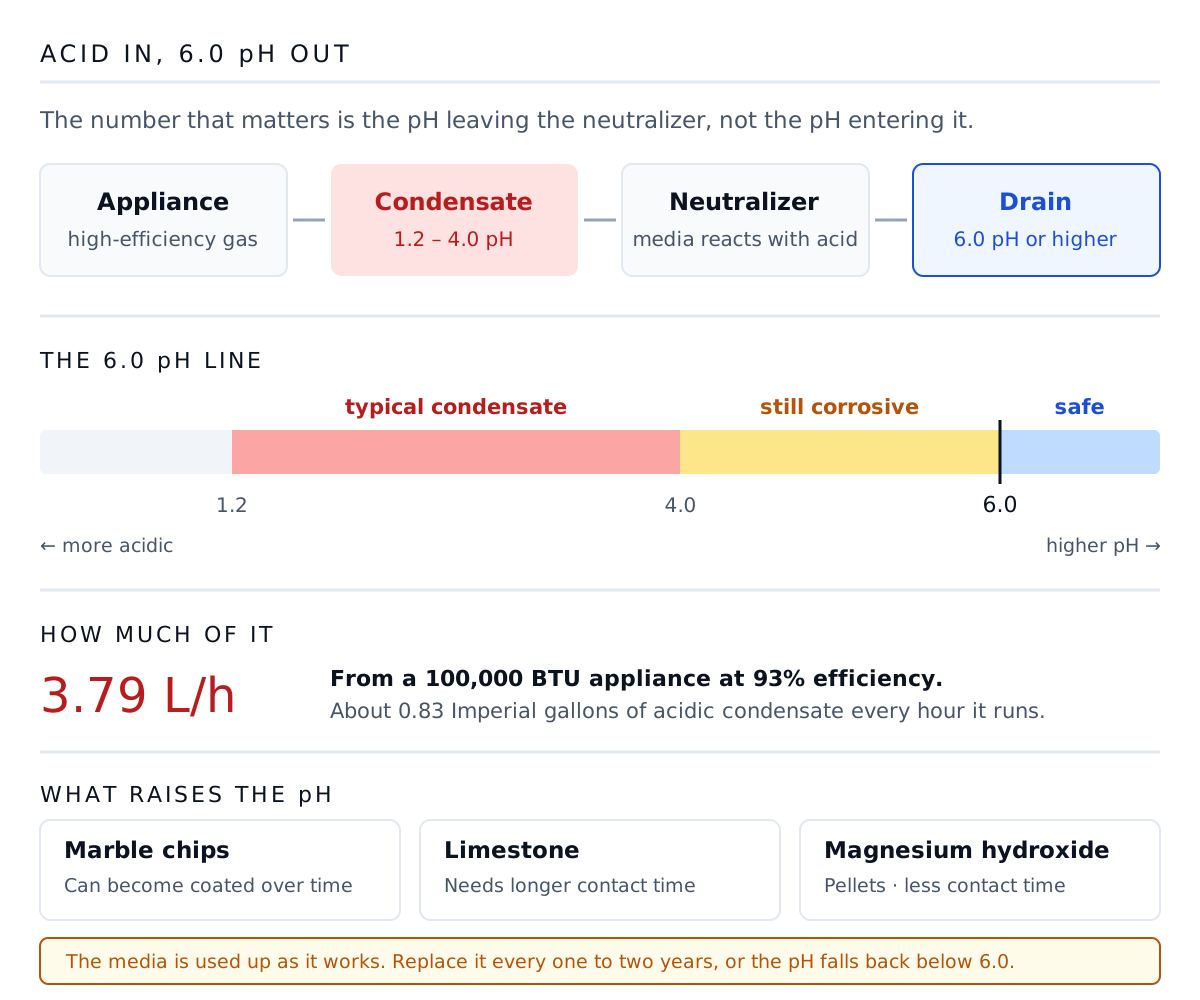
High-efficiency furnaces, boilers and water heaters produce acidic condensate, typically 1.2 to 4.0 pH. A neutralizer raises it to 6.0 pH or higher before it reaches the drain, protecting pipes, sewers and aquatic life. Many jurisdictions require one, and the media must be replaced every one to two years.
Environmental & safety notice
Untreated acidic condensate from high-efficiency furnaces, boilers, and water heaters is highly corrosive. Discharge of condensate with a pH below 6.0 can damage household drains and municipal sewer systems and poses a serious risk to aquatic life, fisheries, and wildlife when it reaches waterways. The goal of a properly functioning acid neutralizer is to raise the pH of the condensate to a safe level (generally 6.0 pH or higher) before it enters the drain.
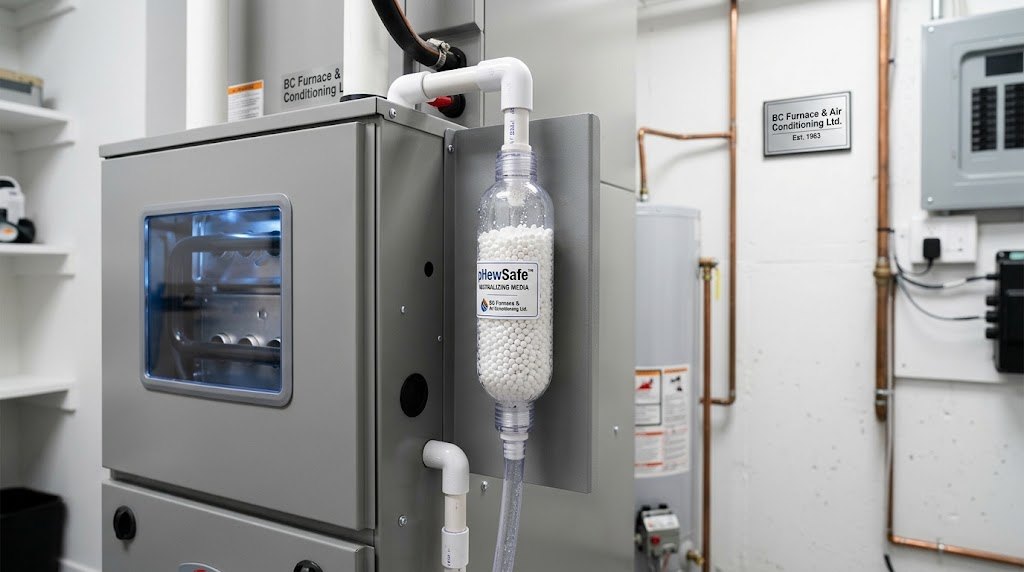
High-efficiency natural gas and propane appliances extract more heat from combustion gases. As a result, water vapor condenses into a liquid by-product that is acidic (primarily carbonic acid). Typical acidity levels range from about 1.2 pH to 4.0 pH — well below the safe threshold of 6.0 pH.
Why You Have (or Need) an Acid Neutralizer
Many states, provinces, and cities across North America now require an acid neutralizer to be installed with high-efficiency gas appliances. The reasons are both practical and environmental:
- Protect household drains and municipal sewer pipes from long-term corrosion caused by continuous discharge of low-pH liquid.
- Protect fisheries, aquatic ecosystems, and wildlife. Acidic water entering storm drains or waterways can harm fish, amphibians, and other sensitive species. Maintaining condensate at or above 6.0 pH significantly reduces this risk.
- Meet code and municipal requirements that are increasingly common for new high-efficiency furnace, boiler, and water-heater installations.
How Much Acidic Condensate Is Produced?
A 100,000 BTU natural gas or propane appliance with a 93% efficiency rating produces approximately 3.79 litres per hour (about 0.83 Imperial gallons per hour) of acidic condensate. Over a heating season this adds up to a substantial volume of low-pH liquid that would otherwise enter the drain system untreated.
The Critical 6.0 pH Threshold
The objective of any condensate acid neutralizer (including pHewSafe™ systems) is to raise the pH of the condensate to an environmentally acceptable level before it is discharged. Condensate should not leave the neutralizer below 6.0 pH. Levels significantly below 6.0 remain corrosive to pipes and harmful to aquatic life. Regular maintenance and timely replacement of the neutralizing media are essential to keep the discharge at or above this safe threshold.
Why the Neutralizing Media Must Be Changed
The media inside the neutralizer (marble chips, limestone, or magnesium hydroxide pellets) is gradually consumed as it reacts with the acid. Over time its effectiveness declines. If the neutralizer is not replaced every one to two years:
- The pH of the discharged condensate can fall back below 6.0
- Corrosion of drains and sewers resumes
- The risk to fisheries and wildlife increases if the acidic water reaches the environment
Common Neutralizing Media
Three widely used, non-hazardous materials are employed to raise condensate pH:
- Marble chips. Effective and long-used, but can become coated over time and lose efficiency.
- Limestone. Also effective; generally, requires longer contact time.
- Magnesium hydroxide pellets. Require less contact time and are well suited to the continuous flow rates of modern high-efficiency systems, pellets are used in pHewSafe™.
All three materials are considered non-hazardous when used as intended and have no known adverse effects on drainage systems or the environment once the condensate has been properly neutralized.
Protecting Your Home and the Environment
A properly installed and maintained condensate acid neutralizer protects your home’s plumbing, helps meet local code requirements, and prevents acidic discharge that can harm municipal sewers, fisheries, and wildlife. Keeping the media fresh so that condensate leaves the system at 6.0 pH or higher is the key to long-term protection.
Common questions
- What pH should furnace condensate be before it goes down the drain?
- 6.0 pH or higher. Condensate from high-efficiency appliances is typically between about 1.2 and 4.0 pH, and levels significantly below 6.0 remain corrosive to pipes and harmful to aquatic life, so the neutralizer has to raise it past that threshold before it is discharged.
- How much condensate does a high-efficiency furnace produce?
- A 100,000 BTU natural gas or propane appliance at 93% efficiency produces approximately 3.79 litres per hour, about 0.83 Imperial gallons per hour. Over a heating season that adds up to a substantial volume of low-pH liquid entering the drain.
- How often does a condensate neutralizer need replacing?
- Every one to two years. The media is gradually consumed as it reacts with the acid, and once it is spent the discharged condensate can fall back below 6.0 pH, corrosion of drains and sewers resumes, and the risk to fisheries and wildlife increases.
- What is the difference between marble, limestone and magnesium hydroxide media?
- All three raise condensate pH and are non-hazardous when used as intended. Marble chips are long-used but can become coated and lose efficiency, limestone generally requires longer contact time, and magnesium hydroxide pellets need less contact time, which suits the continuous flow rates of modern high-efficiency systems.
Parts in this guide
Read next
Know which part failed? We ship it.
Ignitors, pressure switches, control boards and gas valves on the shelf at our Coquitlam warehouse — same-day pickup in Greater Vancouver, shipped worldwide. Call with your model number and we will confirm the part before you order.